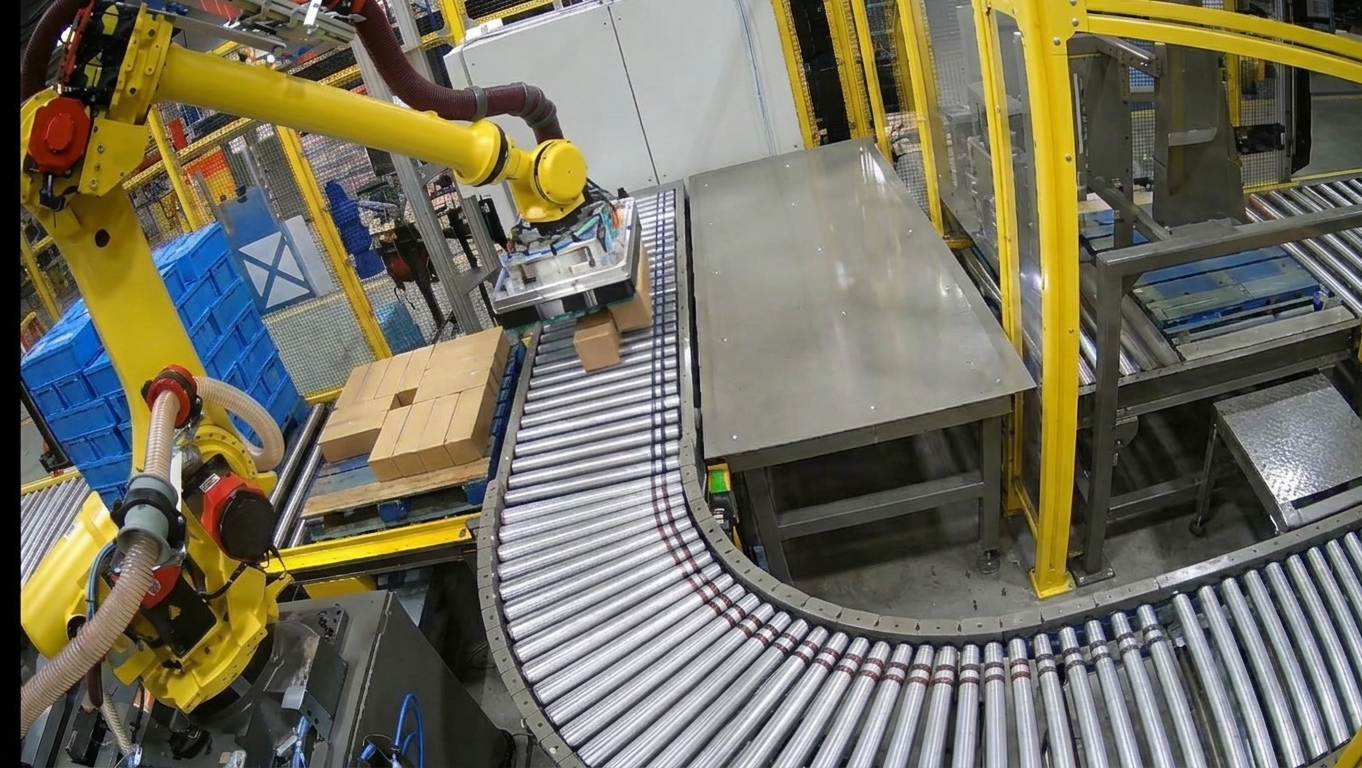

That's rarely because the robot or gripper can't handle more. It's because the system can't tell when lifting two, three or four cartons, boxes or bags at once is safe.
Fizyr OS 3.0 changes that. This release upgrades the vision intelligence behind multi-pick, giving robots the accuracy and speed to pick multiple items in a single cycle across depalletizing, trailer unloading and other supply chain applications.
From the outside, pick and place looks simple: a robot lifts boxes off a pallet or out of a trailer. But when packages vary in size and shape, and no two loads are stacked quite the same way, it becomes one of the hardest problems in robotics. In a split second, the system has to decide what to pick and how to grip it, then make similar decisions about where to place it on a conveyor or pallet.
Picking several items at once raises the stakes. Can they be lifted together without a collision, a dropped box or a shifted load? That's hard to know, so integrators have been stuck choosing between two options:
Either way, every new load or product mix means going back to work through each scenario, reprogram and retest.
Instead of evaluating each item in isolation, Fizyr OS 3.0 reads the entire scene at once. It works out which items can be picked together safely, flags combinations that are risky, and makes that call before the robot moves, not after a failed pick has already cost time, product or an unplanned stop.
The result is the speed of a robot that simply goes for it, combined with the judgment to know when going for it is the right call.
The same scene understanding also drives pattern depalletizing: Fizyr OS recognizes how a load is arranged and clears it in efficient, coordinated passes rather than box by box.
Smarter robots, smarter grippers, greater flexibility and fewer errors. For integrators and system designers in logistics automation, that adds up to:
Multi-pick pays off the most in the jobs that have long resisted full automation because loads are inconsistent.